
FAQs About Email Services for Secure Customer Communications: A Comprehensive Guide
Explore essential FAQs about secure email services tailored for enterprises. Understand the benefits, security features, and compliance aspects vital for secure customer communications.
In a world where data breaches and privacy concerns are on the rise, utilizing a secure email service for customer communications is more important than ever. This comprehensive guide aims to answer the most frequently asked questions regarding secure email services tailored for enterprises. By addressing key concerns, this content will empower IT decision-makers, compliance officers, and operational heads in South African companies to choose the right solution for their communication needs.
Understanding Secure Email Services
Secure email services are designed to protect sensitive information exchanged between businesses and their clients. Utilizing encryption protocols and strong authentication measures, these platforms ensure that communications remain confidential and comply with relevant regulations, such as the Protection of Personal Information Act (POPIA) in South Africa.
What Makes an Email Service Secure?
A secure email service typically features:
- End-to-End Encryption: Protects messages both in transit and at rest, ensuring only authorized parties can access the content.
- Two-Factor Authentication: Requires users to verify their identity through an additional layer of security beyond just passwords.
- Compliance Features: Ensures adherence to industry regulations like POPIA, GDPR, and HIPAA for organizations handling sensitive data.
- Robust User Management: Offers controls for admin oversight, rights management, and access audits for enhanced security.
Common FAQs About Secure Email Services
1. Why Should Businesses Use a Secure Email Service?
A secure email service helps protect sensitive customer information, enhances trust in communications, reduces liability, and ensures compliance with data protection regulations.
2. How Does End-to-End Encryption Work?
End-to-end encryption encrypts the message at the sender’s device and decrypts it only at the recipient’s device. This means that even if the data is intercepted during transmission, it remains unreadable without the decryption key.
3. What Are the Benefits of Two-Factor Authentication?
Two-factor authentication adds an additional layer of security by requiring users to provide an extra piece of information, like a code sent to their mobile device, making unauthorized access significantly more difficult.
4. How Can Secure Email Services Ensure Compliance?
Secure email services often include features designed to meet compliance obligations, such as automated data retention and deletion policies, audit trails, and data loss prevention measures, allowing organizations to adhere to regulations like POPIA.
5. Can Secure Email Services Integrate with Existing Systems?
Most modern secure email services offer API integration and compatibility with other enterprise applications, allowing for seamless implementation and improved workflow efficiency.
Best Practices for Implementing Secure Email Services
To maximize the benefits of secure email services, organizations should consider the following best practices:
- Conduct a Risk Assessment: Identify potential vulnerabilities and understand what sensitive data your organization manages.
- Train Employees on Security Protocols: Regular training on the importance of email security and best practices can help mitigate human error.
- Monitor and Audit Email Activity: Implement logging and monitoring to detect suspicious activity and ensure compliance.
- Regularly Update Security Measures: Stay up-to-date with the latest security protocols and technologies to counter evolving threats.
Conclusion
Secure email services play a crucial role in establishing trustworthy communication channels between businesses and their customers. By understanding the mechanics and advantages of these systems, enterprises can make informed decisions that enhance their operational integrity while protecting customer data. For South African organizations looking to implement robust secure email solutions, Bidvest Data offers infrastructure designed to meet a multitude of complex business needs, ensuring compliance and security in every interaction.
Key Features Include
Discover our comprehensive solution features designed to transform your business communication experience
Managing your sending domains
We implement your designs, images and artwork for optimal delivery. We measure and manage spam ratings, and we monitor and manage blacklisting and reputation of sending domains.

Zero Rated Data
PDF documents, HTML content, videos and animations can be hosted on our Zero Rated Data domains. Reverse billing of data on these domains ensure access for end users to content at no cost. Bidvest Data offers this service on all South African and Namibian mobile networks.
Customizable
Bidvest Data offers custom-built, screen adaptive, HTML environments, enabling features like animation, rotating GIFs, and interactive buttons in the email body and built into the unique microsite.
Large File Batch and Near Real Time Singular Sending
Our service includes automated large file batch sending through sFTP data transfer. The data can selectively drive template messaging. Near real-time email sending is facilitated through our API, using templates or dynamic text.
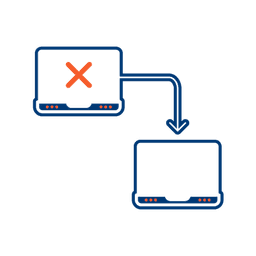
Integrated Failover to the next available channel
Where another channel in our omnichannel platform is unsuccessful in delivering a message, we can automatically fail over to email. Priority and fail over channels are configurable.
Detailed Reporting
Bidvest Data provides near-real-time and periodic aggregate batched reporting on consumer engagement, including link tracking, email delivery status, and customized reports on microsite access.
Ready to Transform Your EMAIL?
Get started today and see immediate results
Frequently Asked Questions
Get answers to common questions about EMAIL